The Objective
Build a scalable public experience for utility, telecom and underground equipment, then give the owner direct control of the catalog and website through TCG OS rather than developer-only edits.
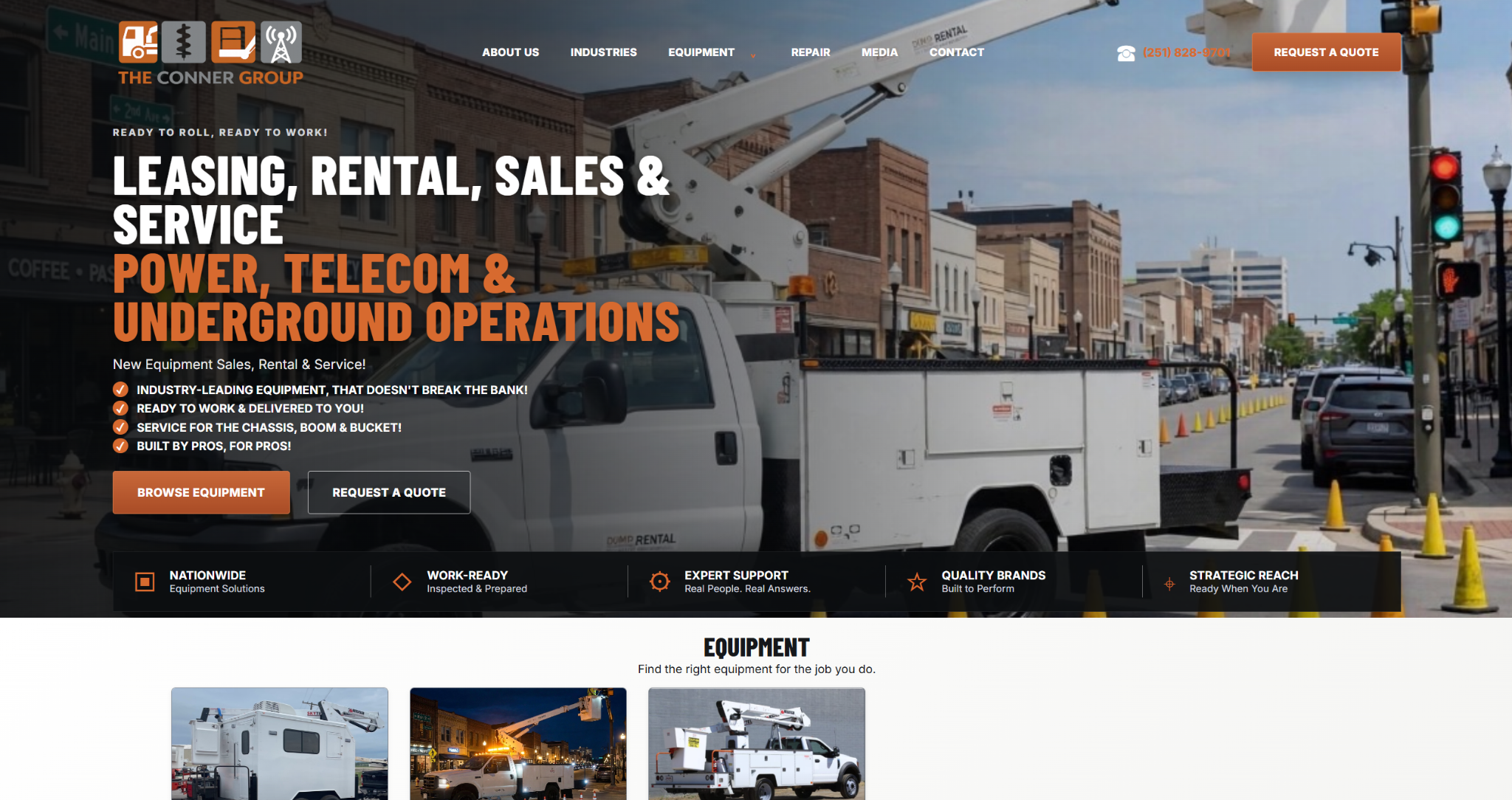
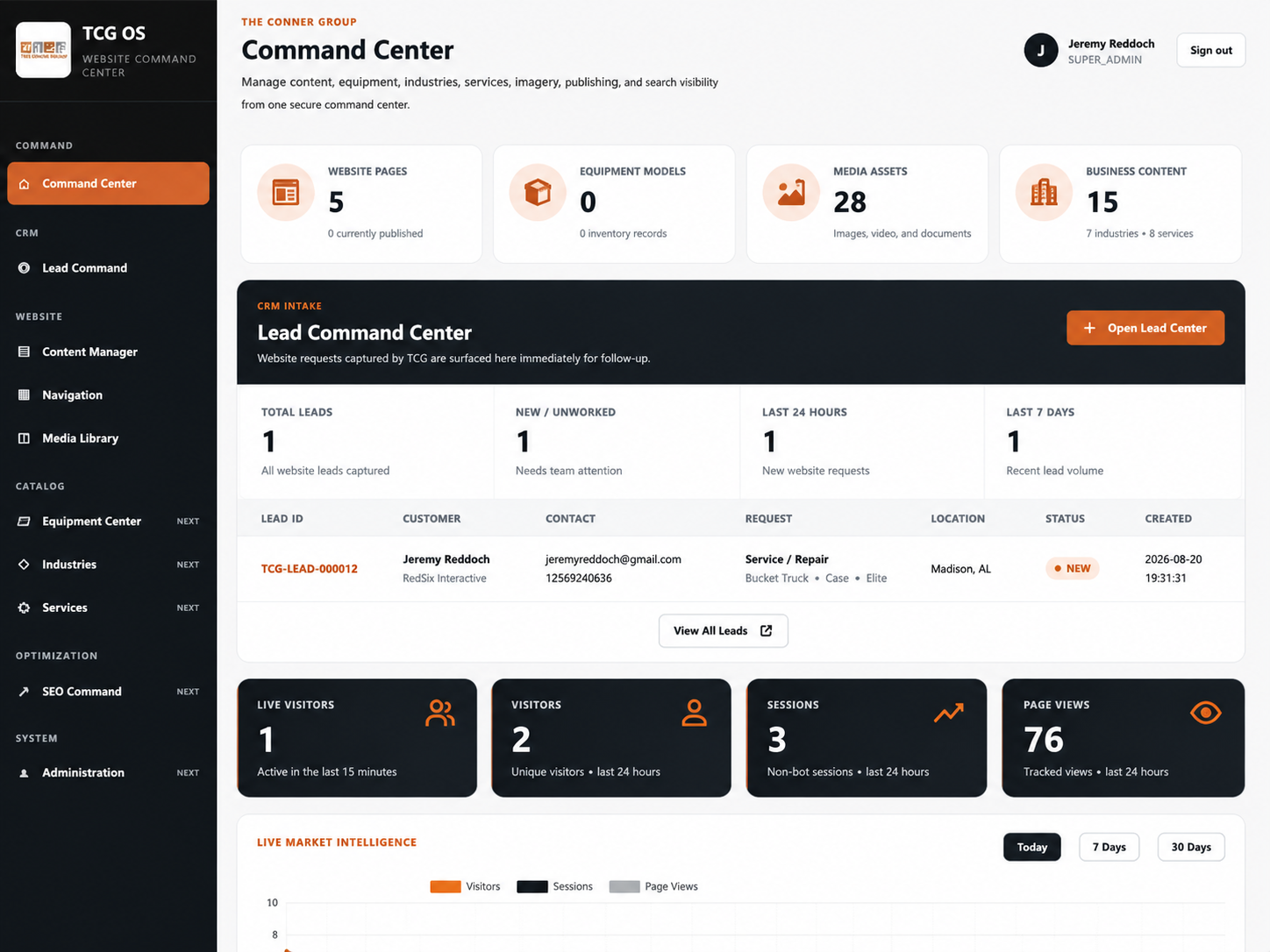
The catalog became a system. A public equipment experience backed by TCG OS so categories, equipment, imagery, content and publishing could be managed without rebuilding pages by hand.
The objective was to modernize the customer-facing equipment experience while creating a backend that could own the content, navigation, equipment, media and website governance behind it.
Build a scalable public experience for utility, telecom and underground equipment, then give the owner direct control of the catalog and website through TCG OS rather than developer-only edits.
A product-heavy equipment website changes constantly. The architecture had to support those changes instead of fighting them.
The public site renders the experience. TCG OS owns the structured content behind it - from navigation and equipment to media, SEO and publishing.
The build moved vertically: establish TCG OS, prove equipment and media management, then let the public website render the structured content.
A modern equipment-focused site with clear categories, industries, service and company content.
A backend platform to manage content, equipment, imagery, publishing and site governance.
Categories, manufacturers, models, specifications, galleries, featured items and publishing state.
Media assignment, category imagery, primary images and supporting documents were managed as website assets.
The public experience was designed around the equipment customers are trying to find and the work they need to perform.
The difficult work was not the hero. It was getting a dynamic equipment platform to behave correctly as categories, products and media changed.
The result is a public equipment website with a structured management platform behind it.
Equipment, industries, service, media and company experience.
Website command center for the public digital platform.
Categories, manufacturers, models, specs and display information.
Reusable images, documents, galleries and asset organization.
Structured menus and published website organization.
Metadata, canonicals, redirects, schema and sitemap controls.
Users, roles, sessions, settings and audit history.
Structured system of record powering the website.
Switch between the customer-facing equipment experience and the command center that manages the website behind it.
THE WEBSITE SHOWS THE EQUIPMENT.
TCG OS CONTROLS THE MACHINE.
The public catalog is backed by managed equipment and content records.
Website updates can be made through TCG OS instead of recurring code edits.
The platform can expand with new categories, equipment, media and content.